
 By
By 
Speed is the currency of the modern internet. Every millisecond of delay costs conversions, engagement, and revenue. That’s why businesses everywhere are paying closer attention to the infrastructure beneath their applications—and discovering that not all clouds are created equal. In the world of Cloud Hosting & Tech, one approach consistently outperforms the rest: bare metal cloud. This powerful hosting model delivers the raw performance of physical hardware with the flexibility of cloud computing, and it is leaving standard virtualized cloud environments in the dust. This article explores the technical superiority of bare metal cloud and why it represents the future of high-performance hosting.
Understanding The Two Approaches
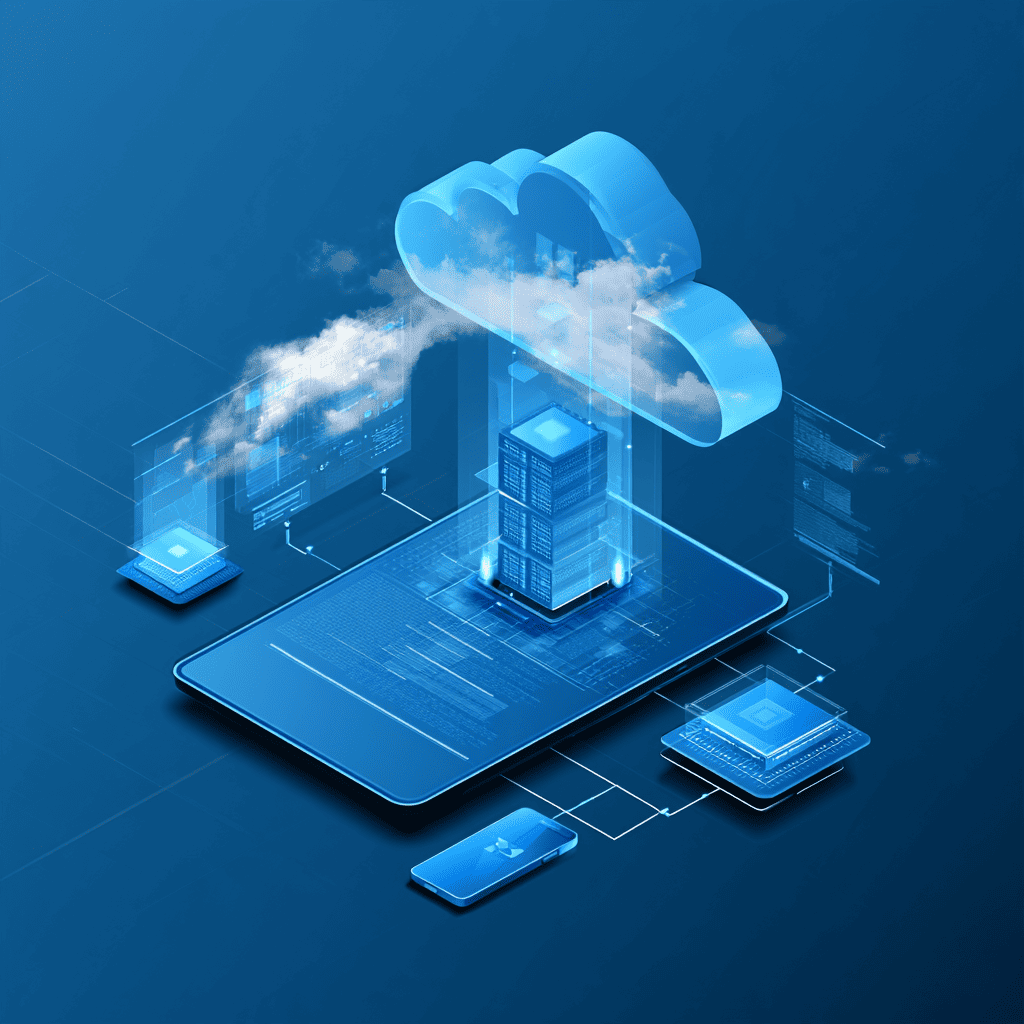 To appreciate why bare metal cloud is so powerful, it helps to understand how it differs from standard cloud hosting.
Standard cloud hosting typically runs on virtual machines. A physical server is divided into multiple virtual instances using a hypervisor—a software layer that allocates CPU, memory, storage, and network resources among tenants. This approach offers flexibility, rapid provisioning, and cost efficiency for many workloads.
Bare metal cloud takes a different path. Instead of virtualizing the hardware, it provisions entire physical servers on demand, often through the same automated interfaces and APIs that make cloud computing so convenient. You get the speed and isolation of dedicated hardware with the agility of the cloud.
Both models have their place. But when performance is the priority, bare metal wins—and here’s why.
The Hypervisor Tax: Why Virtualization Costs You Speed
Virtualization is a marvel of modern computing, but it is not free. The hypervisor layer introduces overhead at every level of the stack.
Every CPU instruction must pass through the hypervisor, adding latency. Memory access is mediated, reducing effective bandwidth. Network traffic is virtualized, introducing additional processing steps. Storage operations pass through abstraction layers that slow down I/O.
For everyday applications, this overhead may be barely noticeable. But for demanding workloads—high-frequency trading, real-time analytics, video processing, large-scale databases—it becomes a significant bottleneck. The hypervisor is, in effect, a tax on performance, and someone has to pay it.
Bare metal cloud eliminates this tax entirely. With direct access to physical hardware, your applications run at the full speed the silicon was designed to deliver.
Raw Compute Power Without Compromise
When you run on a bare metal server, every CPU core belongs to you. There is no sharing, no contention, and no noisy neighbor stealing cycles at the worst possible moment.
This consistency is critical for workloads that demand predictable performance. In a virtualized environment, performance can fluctuate based on what other tenants are doing. In a bare metal environment, performance is stable and reliable, hour after hour, day after day.
For businesses running latency-sensitive applications, this predictability is worth its weight in gold. You can plan capacity with confidence, knowing that the performance you measure today will be the performance you get tomorrow.
Memory And Storage: Unthrottled Access
Memory bandwidth and storage I/O are often the true bottlenecks in modern applications. Bare metal cloud excels in both areas.
Direct memory access means your applications can read and write data at the full speed of the hardware. There is no hypervisor intercepting memory calls, no virtual memory layer adding complexity. For in-memory databases, caching systems, and analytics engines, this translates into dramatically faster performance.
On the storage side, bare metal servers can use high-speed NVMe drives connected directly to the CPU, delivering incredible throughput and minimal latency. Storage operations that might take milliseconds in a virtualized environment complete in microseconds on bare metal.
Network Performance That Sets Records
Network performance is another area where bare metal cloud shines. With direct access to network interface cards and no virtual switching overhead, bare metal servers achieve lower latency and higher throughput than their virtualized counterparts.
For applications that move large amounts of data—content delivery, video streaming, data replication—this network advantage is substantial. And for applications that require ultra-low latency, such as real-time communications or financial trading, it can be the difference between winning and losing.
Isolation: Security And Stability Combined
Bare metal cloud offers another important advantage: complete isolation. Because you are the only tenant on the hardware, there is no risk of another customer’s security vulnerability affecting your environment. There is no shared attack surface, no possibility of cross-tenant data leakage.
This isolation also enhances stability. A runaway process on another tenant’s virtual machine cannot consume your resources or degrade your performance. Your environment is truly your own.
For businesses in regulated industries or those handling sensitive data, this isolation is not just a performance benefit—it is a compliance requirement that bare metal cloud satisfies elegantly.
The Best Of Both Worlds
What makes bare metal cloud truly special is that it combines the performance advantages of dedicated hardware with the operational benefits of cloud computing.
You get automated provisioning, so new servers are available in minutes rather than weeks. You get API-driven management, enabling infrastructure-as-code workflows and seamless integration with modern DevOps tools. You get flexible billing, so you pay for what you use without long-term commitments. And you get the ability to scale up or down as your needs change.
This combination is why so many forward-thinking businesses are migrating their most demanding workloads to bare metal cloud. They want the speed of dedicated hardware without sacrificing the agility of the cloud.
Who Benefits Most From Bare Metal Cloud?
While bare metal cloud delivers advantages for virtually any workload, certain use cases benefit most dramatically:
-
Financial services and trading platforms where microseconds translate to money
-
Gaming and streaming services where user experience depends on instant response
-
AI and machine learning where training times can be measured in days or weeks
-
Big data analytics where processing power determines time to insight
-
High-traffic e-commerce where every page load affects conversion rates
In each of these scenarios, the technical superiority of bare metal cloud translates directly into business results.
The Future Is Bare Metal
As applications become more demanding and user expectations continue to rise, the limitations of virtualized infrastructure will become increasingly apparent. Bare metal cloud offers a path forward—a way to achieve the performance of dedicated hardware with the convenience of the cloud.
The technology is proven, the benefits are clear, and the businesses that adopt it early will enjoy a meaningful competitive advantage.
Unlock the speed your applications deserve. Discover bare metal cloud today—and experience performance without compromise.








Comments